Skip to content
Webflow + ShopifyHeadless Shopify

Black Tie CBD

Selling a restricted category means the platform choice is a compliance decision, so the front end and the checkout came from two different products on purpose.

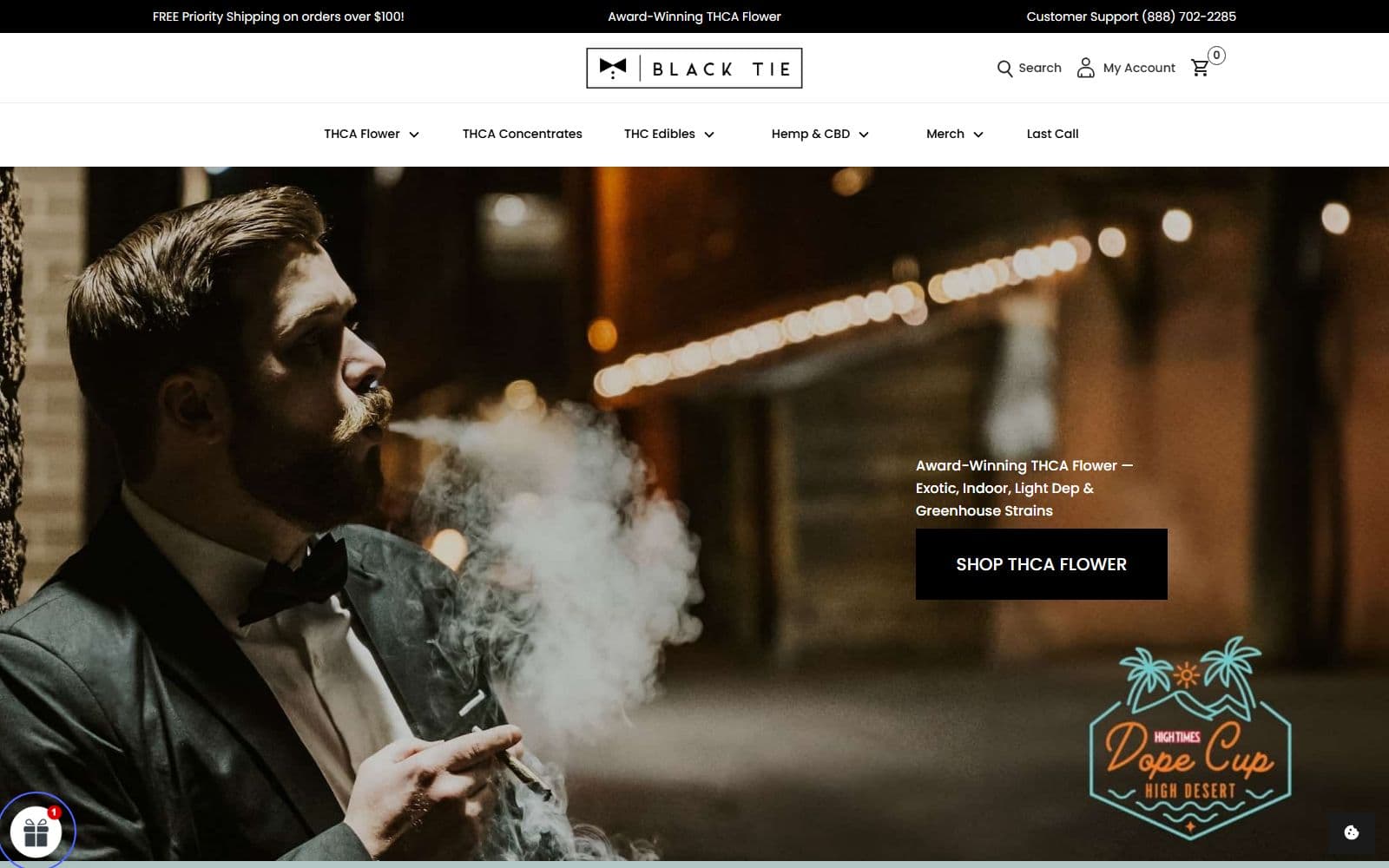
Black Tie CBD: the live site
Our role
Webflow front end wired to Shopify commerce
Timeline
7 weeks
Team
Lead engineer, frontend engineer, designer

21+

Age gate

enforced before the storefront loads

2

Platforms, one store

Webflow front end, Shopify checkout

Affiliate

Programme integrated

plus Klaviyo lifecycle email

01

The problem

A category most platforms would rather not host

THCA flower, concentrates and edibles sit in a regulated, restricted category. Payment processors, ad platforms and ecommerce platforms all have opinions about it, and those opinions change.

On top of that, the brand competes on presentation. It is an award-winning product sold with dark, cinematic art direction, so the storefront needs real design freedom rather than whatever a template allows.

02

What we did

Webflow for the front end, Shopify for the money

The site is built in Webflow, which gives the design freedom and lets the client's team edit pages directly. Commerce runs through Shopify underneath, so cart, checkout, orders and customer accounts sit on infrastructure built for it rather than on a website builder's bolted-on store.

That split is the whole point. Presentation and compliance have different requirements, and giving each to the tool that handles it best is more robust than forcing one platform to do both.

An age gate runs before the storefront is reachable, which the category requires. Klaviyo handles lifecycle email and the on-site capture, and an affiliate programme is integrated for the referral channel that categories like this lean on when paid advertising is restricted.

  • Webflow front end for design freedom and client-editable pages
  • Shopify for cart, checkout, orders and accounts
  • Age verification gate before the storefront loads
  • Klaviyo lifecycle email and on-site capture
  • Affiliate programme integration for a restricted-ads category
03

The outcome

Design freedom without giving up a real checkout

The brand gets a storefront that looks nothing like a template, on a checkout built for selling, with the compliance requirements of the category handled at the front door.

What it is built on

Frontend

  • Webflow
  • Custom JavaScript

Commerce

  • Shopify
  • Cart & checkout
  • Customer accounts

Growth

  • Klaviyo
  • Affiliate programme
  • GA4

What we learned

  • 01

    In a restricted category the platform choice is a compliance decision first and a design decision second.

  • 02

    Splitting the front end from the checkout is a legitimate architecture, not a compromise, when the two have genuinely different requirements.

Next step

Tell us what you are trying to build.

Thirty minutes with the engineer who would lead the project. You will leave with an opinion on what to build, what to skip, and roughly what it costs, whether or not you hire us.

2 build slots open · Next start: early next month

What happens next

  1. 1You send a few lines about the product and the deadline
  2. 2We reply within one working day with times
  3. 3A 30-minute call, no deck, no sales script
  4. 4A written summary and a ballpark range within 48 hours